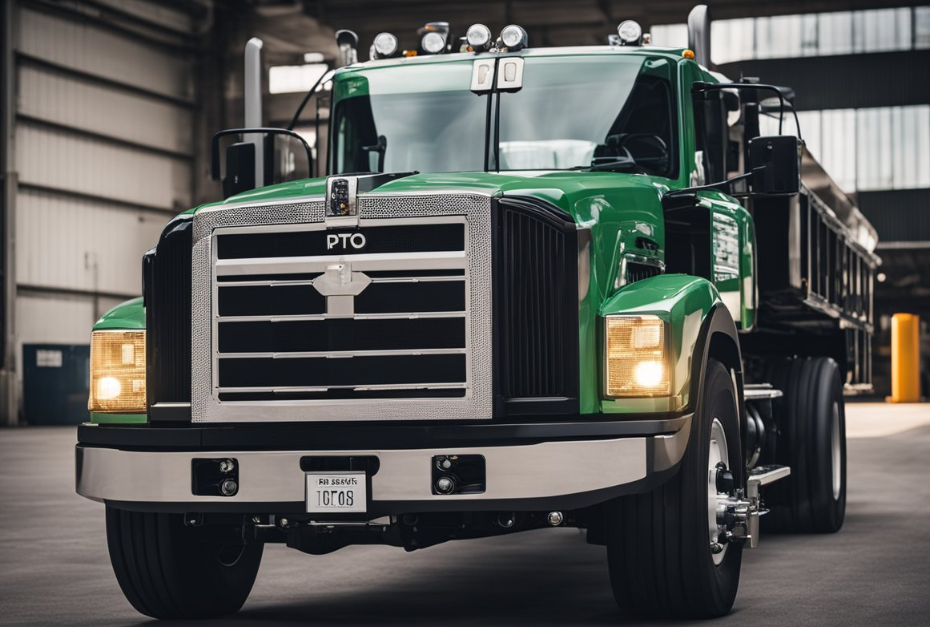
Power Take-Off (PTO) Systems Introduction
If you ever want to have a good discussion about truck power systems, then one term you have to mention is PTO. Many new operators often ask, what is a PTO on a truck? The acronym PTO stands for Power Take-Off. It is a mechanism that transmits power through the engine to auxiliary equipment. Operating machinery that requires more energy is not possible with just simple batteries, hence this system is used.
With truck PTO setups, operators can drive hydraulic systems, operate truck-mounted equipment, and power a range of different PTO-driven equipment, etc. The only area in which it is impossible to comprehend is in the truck versatility aspect by knowing the power take-off system properly. This is especially vital in sectors like construction, agriculture, and emergency service vehicles where the functionality of trucks can be the decisive factor.
Trucks have PTOs of Different Types
Each of the different PTO types that modern trucks can be equipped with is designed for a specific PTO application in industries. The three main systems are side-mount PTO, rear-mount PTO, and split-shaft PTO.
Side-Mount PTO
To the side of the transmission using a transmission adapter is the place where a side-mount PTO will be attached. These systems are generally installed with mounting brackets and additional parts that make installation easy. Side-mounted units engage the pto gearset through in cab controls, allowing quick PTO engagement for equipment like hydraulic pumps, hydraulic circuits, and hydraulic hoses.
Rear-Mount PTO
In trucks, the rear-mount PTO is mounted behind the transmission. These configurations are in most cases used for trucks with heavier loads where the pto drive shaft, shaft coupling, and universal joint can deliver torque in a more efficient way. Rear-mount systems usually supply the trucks with cranes, hydraulic reservoirs, and auxiliary power units. These systems can work for applications needing higher horsepower and have a longer life before maintenance.
Split-Shaft PTO
In the drivetrain, a split-shaft PTO (also called midship PTO or mid-engine PTO) takes the place of part of the drivetrain accessory. Positioned between the engine and the drive axle, this allows the PTO to be fully driven by the engine with a direct connection to the drivetrain. The system operates pump mounts, clutch levers, and power transfer cases that are more powerful than the pump. This is the reason split-shaft PTOs are so popular in PTO systems in trucks, especially within PTO in construction and PTO in agriculture sectors.
PTO Systems in Different Sectors
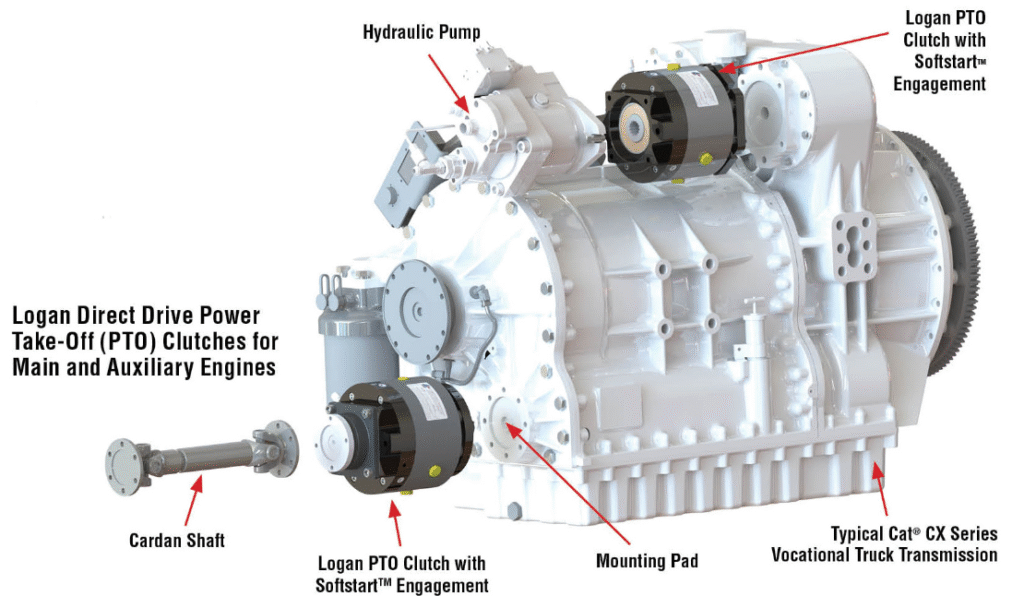
PTO applications in industry are broadly distributed throughout modern usage. They stretch from the hydraulic oil pumps in concrete mixers and the remote PTO controls for those in ambulances to the wider range of potentials of vehicle auxiliary equipment and truck functionality.
Construction
In construction, PTO in construction has no substitute. Heavy-duty construction trucks utilize PTO-powered equipment like truck-mounted cranes, cement mixers, dump trucks, and hydraulic lifts. For instance, a hydraulic pump connected to a hydraulic circuit through a PTO can lift materials or dump loads. By using pto gearsets and drivetrain accessories, construction vehicles achieve unmatched productivity.
Agriculture
In farming, PTO in agriculture is key. Agricultural trucks and tractors run balers, augers, and spreaders. Hydraulic reservoirs and auxiliary power units operated by a pto drive shaft control irrigation systems and feed equipment. Furthermore, farmers depend on service manuals and PTO maintenance practices for smooth operation without interruptions. Regular diagnostic tests and adherence to each maintenance interval help extend equipment life.
Emergency Services
PTO in emergency services is equally important. Emergency service vehicles, such as fire trucks and ambulances, very often depend on truck PTO systems for driving pumps, lighting installations, and hydraulic oil compressors. Fire engines use hydraulic hoses for proper functioning, check for pto misalignment, and follow PTO safety measures for reliable power. In the same manner, ambulances make use of remote PTO controls and in cab controls for medical equipment, ensuring reliability under pressure.
Importance and Safety Considerations of PTO Systems
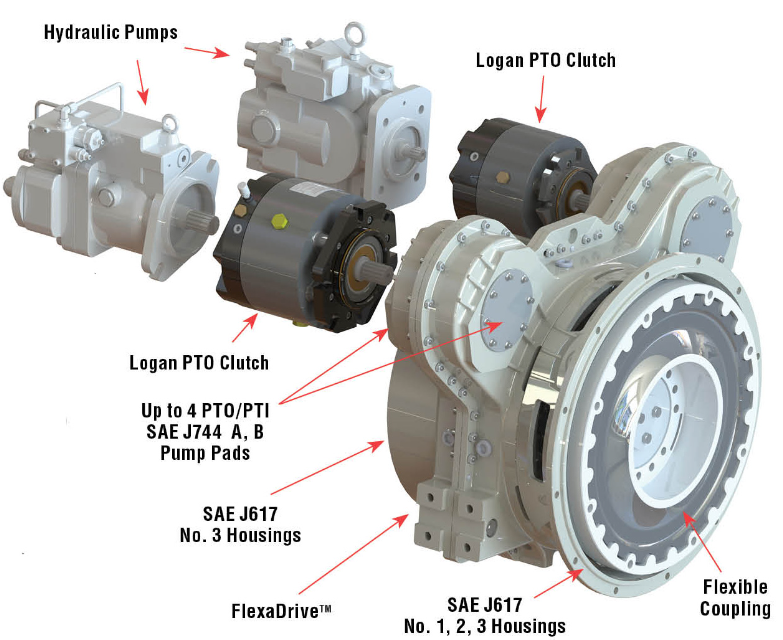
A truck PTO not only enhances truck functionality but also poses unique challenges. Following necessary PTO safety precautions, regular PTO maintenance tips, and service manual recommendations is critical.
Increasing Truck Functionality
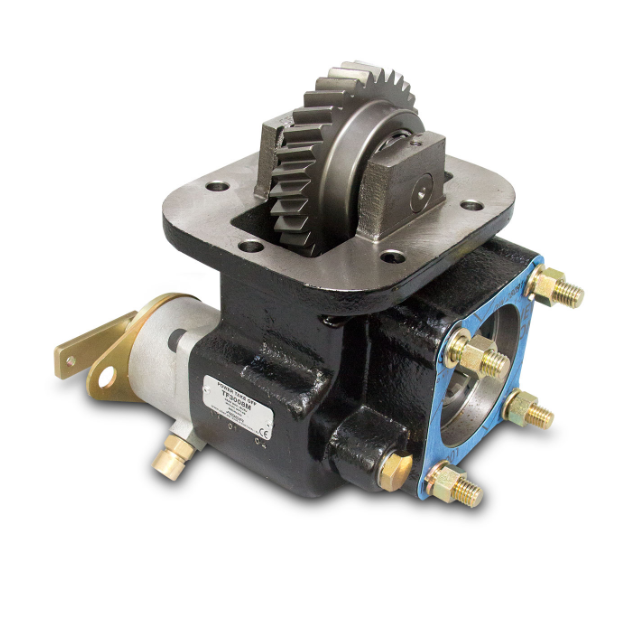
The prime merit that truck power take-off systems provide is enhanced truck versatility. Operators can attach different vehicle auxiliary equipment to perform specific tasks. Truck-mounted cranes, operating a hydraulic pump on a snowplow, or running an auxiliary power unit for refrigeration are all made possible by PTO.
Moreover, PTO engagement is handled easily via in cab controls, enabling safe operation of PTO applications. Features like safety shields, a clutch lever, and a mounting bracket protect operators while keeping the pto drive shaft and shaft couplings aligned.
Safety Matters and Maintenance
PTO systems for all applications | MAN Truck & Bus
Safety should be a priority in all PTO applications in industry. Checking for pto misalignment, lubricating universal joints, and maintaining proper hydraulic reservoir oil levels are essential PTO safety measures. Operators should inspect shaft couplings, mounting bolts, and safety shields at every maintenance interval.
Some key PTO maintenance practices include:
- Regular diagnostic tests of the hydraulic system
- Checking wear on the pto gearset and clutch lever
- Following the service manual recommendations for each model
- Using the correct installation kit for the truck transmission
- Inspecting hydraulic hoses and pump mounts for leaks
Neglecting these practices can lead to accidents, breakdowns, or damage to truck-mounted equipment. Applying strict PTO maintenance tips ensures safe operation of truck power take-off systems.
Final Thoughts
So, what is a PTO on a truck? In simple terms, it is the mechanism that bridges the truck engine with external machinery. Whether it’s engine driven PTO in small vehicles or split-shaft PTO systems in large construction trucks, the technology expands the range of PTO applications in industry.
From PTO in construction to PTO in agriculture and PTO in emergency services, the importance of PTO systems in trucks is evident. They power truck-mounted cranes, auxiliary power units, and countless other tools.
However, the efficiency of truck PTO systems depends on strict PTO maintenance practices, regular diagnostic tests, and adherence to PTO safety measures. Operators who use proper mounting brackets, installation kits, and follow the service manual ensure long-lasting systems.
Above all, truck power take-off systems represent truck versatility at its best. They turn trucks into mobile power stations capable of running vehicle auxiliary equipment across industries. With proper PTO safety precautions and respect for maintenance intervals, fleets can depend on PTOs for productivity, safety, and efficiency.
